
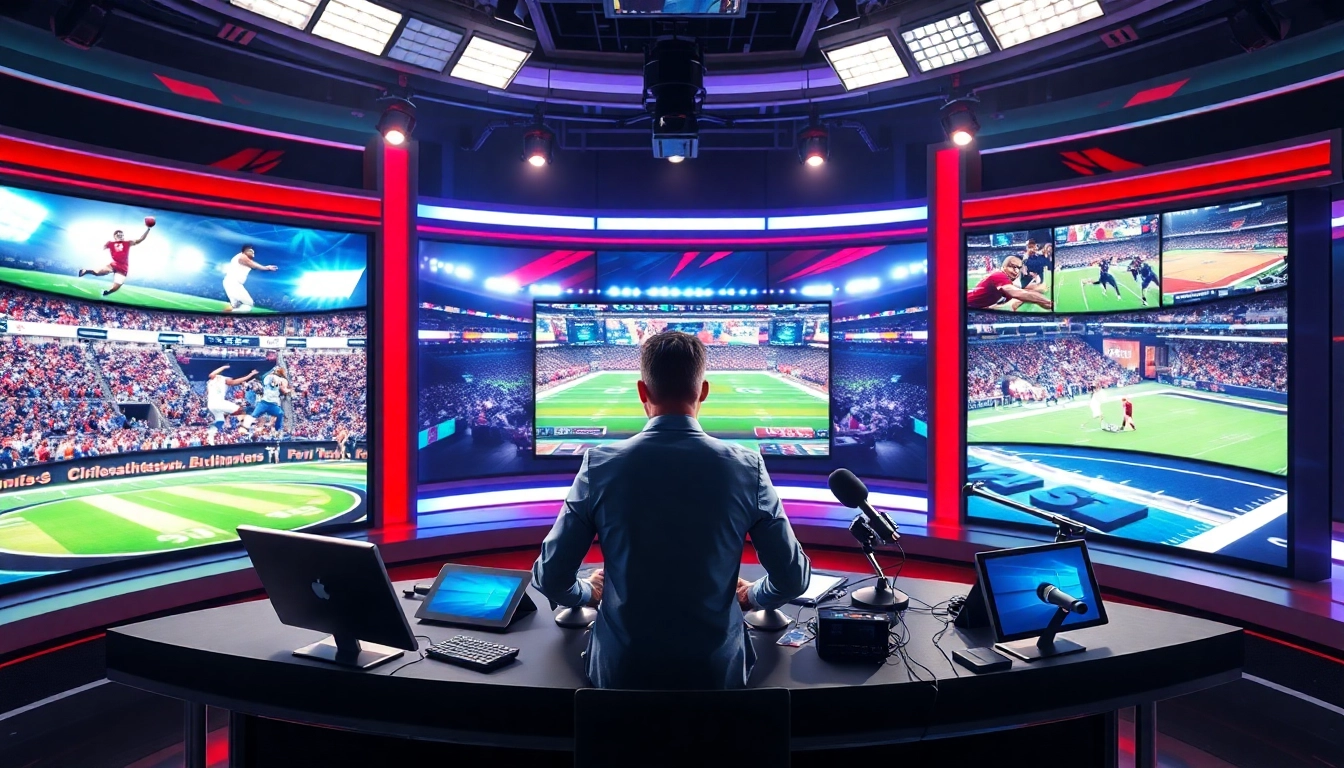
Understanding Sports Broadcasting
Definition and Importance of Sports Broadcasting
Sports Broadcasting refers to the dissemination of sports content via various media platforms, including television, radio, and the internet. This sector plays a crucial role in shaping public engagement with sports, serving as a key medium for fans to connect with their favorite teams and athletes in real time. The innovative delivery of sports events not only entertains millions but also promotes sports culture, drives revenue through advertising and sponsorship, and supports the growth of the sports industry as a whole. One cannot underestimate the importance of Sports Broadcasting in today’s media landscape, where it is often the primary means through which audiences consume sporting events.
Key Players in the Industry
The landscape of sports broadcasting is populated by various players, each contributing to its multifaceted nature. Broadcasters (e.g., ESPN, NBC Sports), streaming platforms (e.g., Amazon Prime Video, DAZN), and over-the-air networks all have a significant role in delivering sports content to viewers. Additionally, production companies, which handle the technical aspects of broadcasting, along with marketing agencies that promote events and sell advertising space, are essential components of this industry. These players form a complex ecosystem, with each interdependent on the others to create a seamless sports viewing experience.
Historical Evolution of Sports Broadcasting
The historical journey of sports broadcasting began in the early 20th century with radio broadcasts of major sporting events. As technology progressed, the introduction of television in the 1950s revolutionized the viewing experience, allowing millions to watch events live from their homes. The 1980s brought cable television and the emergence of dedicated sports channels, vastly increasing the accessibility and variety of sports programming. In recent years, the advent of digital and streaming technologies has transformed sports broadcasting again, allowing for personalized viewing experiences and on-demand content.
Technological Advancements in Sports Broadcasting
Impact of Streaming Services
The rise of streaming services has reshaped sports broadcasting by providing viewers with unprecedented flexibility and access. Platforms such as Hulu Live, Sling TV, and YouTube TV allow audiences to watch live sports without traditional cable subscriptions, catering to the growing demand for on-the-go viewing. This shift has not only democratized access to diverse sports content but has also changed how broadcasters and leagues monetize their offerings, introducing subscription models where direct-to-consumer relationships can flourish.
Introduction of Virtual and Augmented Reality
Virtual Reality (VR) and Augmented Reality (AR) technologies are making waves in sports broadcasting by enhancing viewer experiences. VR allows fans to immerse themselves in live sports environments as if they were present in the stadium, while AR can provide real-time statistics and player information during broadcasts. This technology creates an engaging experience, making viewers feel a deeper connection with the action.
Leveraging Data Analytics
Data analytics has become indispensable in sports broadcasting, enabling networks to provide rich insights into games as they happen. By analyzing player performance, fan engagement, and viewing habits, broadcasters can tailor content to meet audience preferences. This data-driven approach not only enhances the viewer experience but also helps broadcasters optimize their strategies for future events, drive advertising revenue, and maintain a competitive edge.
Impact of Sports Broadcasting on Audience Engagement
Enhancing Viewer Experience with Interactivity
Interactivity in sports broadcasting allows viewers to engage with content in ways that extend beyond passive viewing. Features such as live polling, chat functionalities, and interactive graphics have transformed how audiences experience sports. Real-time engagement empowers fans to express opinions and connect with fellow supporters, making the viewing experience more communal and enjoyable.
Importance of Social Media Integration
Social media platforms have become integral to the sports broadcasting ecosystem. They facilitate real-time interaction, allowing viewers to share their thoughts and experiences during live events. By integrating social media into broadcasts, broadcasters can harness fan input, create buzz around events, and foster community among viewers. This synergy not only enriches the viewing experience but also drives higher engagement and loyalty.
Building Community Through Fan Engagement
Fan engagement is vital in building a community among sports enthusiasts. Effective broadcasting involves not only showcasing events but also creating a narrative that resonates with fans. Initiatives such as fan interviews, behind-the-scenes content, and interactive games or competitions during broadcasts encourage viewers to participate and feel a sense of belonging. This engagement fosters loyalty and increases the likelihood of returning viewers.
Regulatory and Ethical Considerations in Sports Broadcasting
Broadcasting Rights and Licensing
Broadcasting rights are central to the sports broadcasting industry, dictating how and where content can be aired. Leagues and organizations negotiate contracts with broadcasters, ensuring that media rights are distributed fairly and profitably. Understanding the complexities of broadcasting rights, including geographic restrictions and digital rights, is essential for any entity involved in sports media.
Addressing Content Piracy Issues
With the increase in digital content distribution, piracy has become a major concern in sports broadcasting. Unauthorized streaming services and websites threaten to undermine legitimate broadcasters and leagues, leading to significant revenue losses. It is critical for the industry to adopt robust security measures and collaborate with law enforcement to combat piracy, ensuring that content remains protected and accessible to viewers through legal channels.
Ensuring Fair Competition
Fair competition in sports broadcasting is vital to maintain a healthy ecosystem. This involves eliminating anti-competitive practices, ensuring equitable access to broadcasting rights, and safeguarding the interests of both broadcasters and leagues. Establishing regulatory frameworks that enforce transparency and fairness can help nurture a competitive environment that benefits consumers and drives innovation.
Future Predictions for Sports Broadcasting
Emerging Trends and Technologies to Watch
The future of sports broadcasting is poised for continuous evolution, influenced by emerging technologies and societal trends. Innovations such as blockchain for secure transactions, AI for content personalization, and even 5G for enhanced streaming experiences are set to revolutionize how sports content is produced and consumed. Keeping pace with these trends can provide broadcasters with significant advantages in capturing and retaining viewership.
Potential Changes in Viewership Patterns
Viewership patterns in sports broadcasting are expected to shift dramatically, largely due to generational changes in media consumption. Younger audiences prefer on-demand and mobile viewing experiences over traditional television formats. Broadcasters must adapt to these preferences by offering more targeted, flexible broadcasting solutions that cater to their evolving demands, shaping the future of viewer engagement.
How Broadcasters Can Adapt to Changes
Adapting to changes in the sports broadcasting landscape requires a proactive approach. Broadcasters must invest in technology, embrace new business models, and focus on audience-centric content strategies. Fostering partnerships with technology companies, exploring innovative monetization avenues like subscriptions, and prioritizing engaging storytelling can help broadcasters stay ahead in an ever-changing environment.
Frequently Asked Questions
What is sports broadcasting?
Sports broadcasting is the transmission of live sports events through various media channels including television, radio, and streaming services, enabling fans to view their favorite sports in real time.
How have streaming services changed sports broadcasting?
Streaming services provide greater flexibility and accessibility, allowing fans to watch sports on multiple devices without a cable subscription, significantly broadening the audience reach for broadcasters.
What role does social media play in sports broadcasting?
Social media enhances viewer engagement by allowing real-time interaction, sharing of experiences, and deeper connections among fans, making broadcasts more interactive and communal.
How is data analytics used in sports broadcasting?
Broadcasters use data analytics to gain insights into viewer preferences and player performance to customize content, estimate viewership trends, and enhance the overall broadcasting strategy.
What are the major challenges facing sports broadcasting?
Key challenges include content piracy, maintaining fair competition, and adapting to the rapidly changing media landscape driven by advances in technology and shifting viewer preferences.